
Florida’s rainy season brings heavy downpours that can ruin your landscape. You must prepare your lawn early to prevent standing water, root rot, and pest issues. Proper drainage, core aeration, and adjusted mowing practices will keep your yard green and healthy all summer.
Getting Your Lawn Ready for Summer Storms
Summer in Central Florida means daily afternoon storms. The rainy season officially begins June 1. This gives you a short window to prepare your lawn for Florida’s rainy season.
Many homeowners wait until their yard is underwater to act. By then, excess moisture has already caused severe lawn damage. You can protect your property by taking proactive steps now.
A little preventive work helps you keep your lawn safe. High Standard Landscape is ready to help your lawn survive. Every lawn in Florida faces these challenges.
Why Central Florida Yards Fail During Heavy Rain
You invest time and money into your yard all year. It is frustrating when heavy rainfall washes that hard work away. The wet weather exposes hidden weaknesses in your landscape.
Compacted soil is a major culprit for flooding. Hard dirt cannot absorb water as well during a severe rainstorm. This forces the rain to pool and creates waterlogged soil.
Poor drainage slopes also trap water near your foundation. If your lawn has a history of flooding, you must act. Standing water drowns delicate roots and encourages weed growth. You need a solid defense before the rainy days begin.
Adjusting Your Irrigation and Mowing Practices
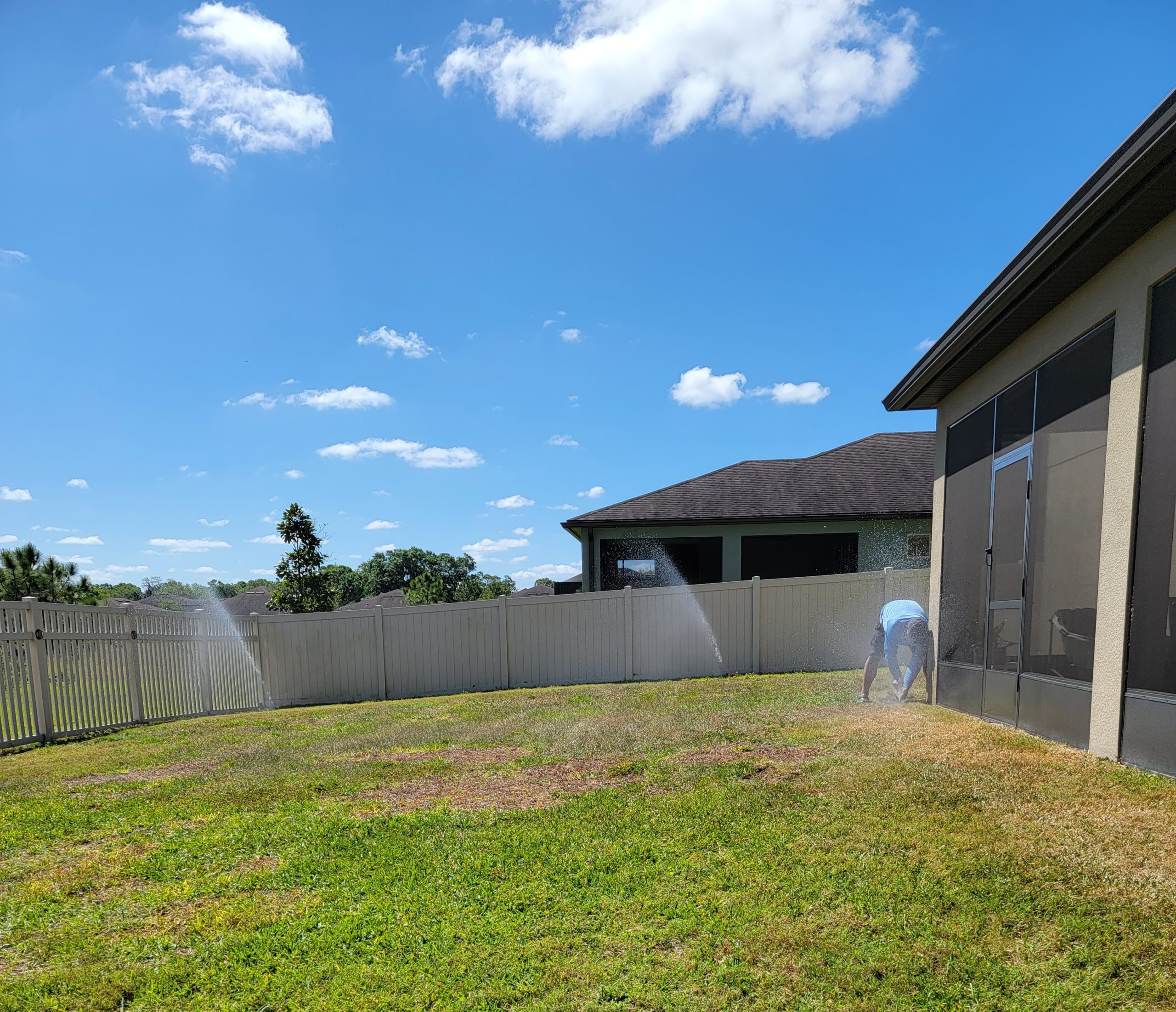
Your lawn needs less supplemental water when it rains daily. You must adjust your irrigation timers for the wet season. Overwatering during the summer leads to severe root rot.
Inspect all sprinkler heads before the heavy rain starts. When it comes to lawn maintenance, timing is everything. You should never mow wet grass after a storm.
Wet weather lawn care requires adjusting your mowing practices. Set your mower blades slightly longer during the summer. Taller grass gives your lawn deeper roots to survive heat. Make sure every blade is sharp to avoid tearing.
Managing Soil Compaction and Core Aeration
Definition: Core Aeration: The practice of removing small plugs of soil from the ground. This opens the surface, allowing air, water, and nutrients to reach the roots.
Heavy foot traffic makes your dirt hard and compact. When your lawn feels solid underfoot, water cannot penetrate. Core aeration solves this problem by breaking up the surface.
This process helps your grass breathe and absorb nutrients. Yards in Plant City and Lakeland absorb water better after aeration. It also breaks down thick thatch that traps excess moisture.
Removing small plugs of soil improves your overall drainage. This simple step gives your lawn a fighting chance. A healthy lawn resists pests better.
Preventing Fungal Diseases and Pest Infestation
Summer heat and excess moisture create perfect conditions for fungus. Fungal diseases like brown patch and dollar spot spread quickly. You might notice your St. Augustine grass start to turn yellow.
If your lawn looks patchy, fungal growth is likely the cause. Applying a preventative fungicide can stop these issues early. You also need a strong pest control strategy for summer.
Pests thrive in wet conditions and destroy healthy grass. A mole can tear up your yard searching for grubs. Chinch bugs also cause massive damage during the warmer months. Regular pest control keeps these destructive insects away.
Refreshing Mulch and Redirecting Runoff
A fresh layer of mulch is your best defense against runoff. Mulch acts like a sponge to regulate soil moisture. It slows down the water and prevents severe erosion.
You must also redirect water away from your house. Proper drainage landscaping moves water toward local storm drains. You can improve drainage by fixing low spots early.
Retaining walls help manage water flow on sloped properties. These features ensure your yard does not become completely waterlogged. Protect your lawn from heavy rain.
Professional Lawn Care Advice
Our team sees the same yard problems every summer. Homeowners often try to fix drainage issues with quick solutions. Pouring extra dirt into a low spot rarely works.
You can handle basic tasks like adjusting sprinkler timers yourself. However, changing the grade requires professional lawn expertise. Moving water incorrectly can flood your neighbor’s property.
We recommend assessing your yard during a heavy spring rain. Watch where the water flows and where it pools. This shows exactly which areas need professional lawn services.
Securing a Green Lawn and Healthy Yard Before Summer
The Florida rainy season is predictable and powerful. You do not have to let summer storms destroy your yard. Early preparation is the key to a healthy landscape.
Check your irrigation system and refresh your mulch this month. Identify any low spots that hold water for more than a day. Proper fertilization right now builds strong roots for summer.
Avoid applying heavy fertilizer right before a major storm. Taking these steps ensures you get your lawn ready. Keep your lawn healthy all season long.
Quick Answers About Summer Yard Prep
What is the best time to prepare my lawn for Florida’s rainy season?
You should start preparing your yard in April or early May. This gives you enough time to fix drainage issues before June.
Should I turn off my sprinkler system during the summer?
Do not turn it off completely. You should adjust the run times and rely on a rain sensor.
How can I tell if my lawn has a fungal disease?
Your turf may turn yellow or develop brown circles. Dollar spot and brown patch are common signs of fungal growth.
Why is core aeration important before the rainy season?
Aeration relieves compacted soil by removing small plugs of dirt. This allows the ground to absorb heavy rainfall efficiently.
What pests should I watch out for in wet weather?
Chinch bugs and mole activity increase during the summer. A good pest control plan prevents a severe infestation.
Get a Professional Landscape Assessment
Are you worried about standing water or poor drainage? Do not wait until the summer storms flood your property. Let our experts evaluate your landscape and create a plan.
Contact us today for a free on-site landscape design estimate. A beautiful lawn requires year-round effort. Your lawn will thank you.
Action Plan for Your Yard
- Start your yard preparation at least five weeks before June.
- Adjust your irrigation timers to account for daily summer rainfall.
- Schedule core aeration to relieve compacted soil and improve drainage.
- Apply two to three inches of fresh mulch to all planting beds.
- Set your mower blades slightly longer to protect the grass roots.
- Apply preventative fungicide to stop brown patch and dollar spot.
- Monitor your yard during spring rains to identify low spots.
- Hire a professional to correct severe grading and drainage issues.




0 Comments